Tree Diversity Lab

Related image
Source: Ry Glover

Methods:

Students from an ecology lab class at the University of Tennessee at Chattanooga were interested in analyzing the differences in tree species diversity at different areas of the forest. The class took a trip to the Blue Blazes trail in Chattanooga, Tennessee to analyze the differences in tree species diversity at different areas of the trail.

Students arranged in teams of four where they used a line transect systematic sampling approach to acquiring their data. In a line transect, the organisms touching a piece of string stretched along the transect are recorded. This type of transect was used because of its quickness but students were warned that this method can under estimate the
number of species present in an area. The students were given the appropriate equipment in order to collect their results (equipment can be seen in the slideshow below).


This slideshow requires JavaScript.

The group used transect tape to make a 50-meter (165 feet) line from the trail into the forest interior. Students were asked to track the number of different tree species (including tree saplings) every 1.5 meters (5 feet) using the string provided. To determine which side of the transect to sample, the group flipped a coin with heads being the left side of the trail and tails being the right side of the trail.

Once the data was collected, students returned to the university for further statistical analysis. They used their data to make a scatter plot depicting change in tree species
diversity along a forest gradient (forest edge to forest interior).


Significance:

In today’s lab, students used a line transect systematic sampling approach in order to assess tree species diversity from the forest edge to the forest interior of an urban forest.

Capture
Line Transect vs. Belt Transect, Source: “Tree Diversity” Lab Handout

Students were also asked to infer the effects of urban development on increased habitat fragmentation and how they might impact the species diversity of a habitat.


Results:

line.png


Line transects, as I mentioned, have a tendency to underestimate the amount of species present. From the data depicted visually above in the “Tree Species Richness of Blue Blazes Trail”, the reader should notice the trend of decreasing tree species richness as one enters further into the forest. 0 feet marks the start of the trail and 165 feet is the thick underbrush of the forest.

As we progressed further into the forest, we noticed larger trees with opportunistic greenery below. The trees became larger in size but less tree species were present. The understory was filled with many small plants and became a challenge to navigate and fight through the thick brush.


Reflection Questions:

1. Provide an overall description of the habitat. Some characteristics you may consider include: soil condition, evidence of disturbance, temperature, light intensity, tree size, water condition, etc.

The habitat at the Blue Blazes trail is remarkably preserved for being so close to downtown Chattanooga and the city deserves praise to have such an accessible nature are available to its residents. That being said, the trees were very homogenous in this forest with only a few species present that we examined. The area has been slightly disturbed with the trails, the radio tower, and the presence of a golf course that borders the east part of the trail.

When we were there, the temperature was in the 30’s with the presence of moderate winds. The trail was wet in the low-lying areas near the natural boggy swamp. Although, it has been slightly flooded most times I have visited the Blue Blazes trail. Trees were very tall and the forest was very dense off the trail.
2. Based on your scatterplot, what pattern did you observe in tree species diversity as you moved from the edge of the forest to the interior? Does the pattern have a strong or weak effect on number of tree species? How do you know?

The pattern our group observed as we moved from the edge of the forest on the trail to 165 feet into the forest interior is that trees became larger, but fewer tree species were present. The trees had become more homogeneous as you went further into the fragmented habitat. I would say that the pattern has a weak effect just because there were clumpages of trees we encountered as we went further into the forest interior, but the trendline of the scatterplot shows a clear pattern.


3. Run a regression analysis in Microsoft Excel on your data. In Data Analysis, select
regression. Select the line transect values for the Input X range and number of tree
species for the Input Y range. Explain whether or not the relationship is statistically
significant. NOTE: You do NOT have to include all the results from the regression
analysis. Only include the p-value.

After running the regression analysis, it can be determined that the relationship is not statistically significant. From the regression analysis we found the R^2 value = 0.11991, and the P-value = 0.052. Because the P-value is slightly above the alpha level of 0.05, making the findings not statistically significant (but are very close!).


4. As the terrestrial environment becomes increasingly fragmented, what patterns in tree diversity might you expect to see based on your results? What follow up questions do you have for a future study?

As a terrestrial environment becomes increasingly more fragmented, the patterns of tree diversity we could expect to see would likely mirror the results from the Blue Blazes Trail: larger trees, but less tree species richness.

I would be curious to see the results of future studies in the same Moccasin Bend area. Further studies may show how the forest may become less fragmented over time as the area is federally protected against development. It would also be interesting to see how the same habitat changes through different weather patterns and times of the year.


“Gene Flow Halted by Fragmented Forests” Reflection Questions:

1. According to the article, why is the conservation of river floodplain ecosystems
important?

Forests on the banks of rivers and streams support a habitat rich with biodiversity. Plant and animal life thrive in the watershed environments due to the high soil moisture. These vital ecosystems are important in maintaining water quality, preventing erosion and provide important habitat for wildlife.

The article found that the loss of forests will also likely reduce gene flow by means of pollination. The study also found that surrounding forests, as well as forests along rivers, are important for maintaining gene flow in Acer miyabei. River floodplain ecosystems are very important to this species and many other plants and animals and deserves to be met with conservation efforts.

2. Explain why gene flow is important for monitoring endangered species such as Acer miyabei. How does landscape genetics help to understand gene flow patterns?

Gene flow is important for monitoring endangered species such as Acer miyabei because the more genes present, the healthier the diversity is for the tree. The tree’s method of reproduction is pollination by flies. The article suggests that younger trees are exposed to greater genetic isolation than older trees due the recent forest fragmentation. Because the gene flow between younger populations of trees is reduced, they share fewer variant forms of a gene and will in turn have less diversity and a more homogeneous forest.

Landscape genetics help us to understand gene flow patterns by understanding how healthy a forest is. In the study, landscape genetics was used when researchers categorized trees as young or mature by measuring the diameter of the largest stem at breast height (DBH). They found that young trees had a smaller DBH than older trees.


3. What were the overall findings of the study? How does such research inform our
conservation and restoration efforts?

The overall findings of the tree illustrate the importance of conservation of the vital forest habitats along the banks of rivers and streams. The article used landscape genetics techniques and analyzed gene flow in the A. miyabei populations and found that these remnant populations act as important reservoirs of genetic variety. The study called for the preservation of these important forests to connect these remnant populations of trees.

As mentioned earlier, the article found that the loss of forests will also likely reduce gene flow by means of pollination. The study found that surrounding forests, as well as forests along rivers, are important for maintaining gene flow in A. miyabei populations. River floodplain ecosystems are very important to this species and many other plants and animals and deserve to be met with conservation efforts.


References:

“Gene Flow Halted By Fragmented Forests.” Asian Scientist Magazine. Science, Technology and Medical News Updates from Asia, 12 Mar. 2018.

Lantman, Irene M. van Schrojenstein, et al. “Tree Species Identity Outweighs the Effects of Tree Species Diversity and Forest Fragmentation on Understorey Diversity and Composition.” Plant Ecology and Evolution., vol. 150, no. 3, National Botanic Garden of Belgium :, Nov. 2017, pp. 229–39, doi:10.5091/plecevo.2017.1331.

Calculating Animal Home Ranges in Human-Modified Environments: Cat Tracker

Introduction:

An ecology lab class at the University of Tennessee at Chattanooga was interested in calculating the home ranges of cats in New Zealand, Australia, and the United States of America and comparing the results to determine what abiotic and biotic factors may

Image result for cat with tracker
Source:  Disco​very Circle, Cat Tracker Project

impact the ranges in these human-modified habitats. 15 individual cats were studied from each of the three countries. The actual physical area covered in the course of
these regular movements is the animal’s home
range.

Through the Cat Tracker program, owners of the cats were given GPS collars to track the movements of their cats by the process of radiotelemetry. Radiotelemetry is a
tracking technique in which a scientist attaches a signal-emitting transmitter to an animal which is then released. From the data they gathered from the collars, students were asked to use their resources to determine to the cats’ home ranges in hectares.

The collars on the cats looked very similar to this one, shown below:

Related image
A GPS tracking collar similar to the ones used in the Cat Tracker program Source: Daniel, AppAccessories


Students used the following resources to determine the home ranges of the cats:

  • Google Earth Pro
  • MoveBank.org (Cat Tracker)
  • EarthPoint.com
  • Microsoft Excel

Later, the students were asked to create a one-way ANOVA with the excel results from two other classmates. This ANOVA graph can be seen in the results section below.


Significance:

The significance of this study is to examine and compare the home ranges of cats in three different countries and infer what abiotic and biotic factors may impact these results. Students also noticed how cats can negatively affect the biodiversity in the habitats they inhabit by consuming small prey.


Results:

Capture

Data was combined with two other classmates to make for a grand total of 135 cats. When averaged together, cats in New Zealand had the largest home range at 5.75 hectares. This was much different from my personal set in which the cats in the United States had the largest home range and the cats in New Zealand recorded the home range. In addition, variation is also the highest by far in the New Zealand data set (212.59).

Reflection Questions:

1. What were the average home ranges for cats in each of the countries? Make a bar graph of the average home ranges by country. Include error bars.

Capture As shown by the bar graph to the left, the United States of America had the largest average home range of the cats in hectares. In addition, the United States also had the largest standard error of 2.312. This is due to the United States being larger and widespread than the other two countries. In the United States, a cat may roam a small suburban neighborhood limiting a cat’s home range by a perimeter consisting of major roads, or, the cat may live on a more rural property where its boundaries are more unrestricted.

Across the world, the countries of Australia and New Zealand reported similar average home ranges. Australia reported a slightly higher average home range of 3.802 than New Zealand, which had an average home range of 3.36 respectively. Average home range and standard error are positively correlated, as one increases, the other will do the same.

2. Based on your observations in Google Earth, what types of habitats were in the cats’ home range?

These habitats vary by each individual country and in each country, variation in habitats exists. For instance, New Zealand is a tropical island country located in the southern hemisphere. This island is densely populated with 4.75 million residents and 6 people per square mile (worldpopulationreview.com). The average home ranges for cats in New Zealand was lowest of all three countries due to many limiting external factors such as:

  • Boundaries limited by roads
  • Boundaries limited by ocean
  • High population density

New Zealand’s statistics differs from the United States of America, which had the largest average home range with 8.711 hectares. The United States is a much larger country and is more spread out. The average home range for cats in dense urban areas is similar to the average number produced by New Zealand, but in more rural areas of America where cats have more land to roam bring the average up. Some of these rural habitats are wooded areas and grasslands with limited human intervention where cats can roam with few limitations.

3. How did the cat’s location (urban, rural) influence it’s use of the landscape? NOTE: Think about parts of the landscape that the cats appear to avoid, spend the most time in, etc.

The cat’s location plays a major role in its average home range. In urban areas, we can expect the cat to have a limited home range due to the dangers presented by roads and automobiles which limit its respective range. On the other hand, in the rural areas, cats have less limitations and may roam more freely with less roads and automobiles to watch for.

4. What abiotic and biotic factors might influence the size of the cats’ home range?

Many factors play into determining the average home range of the cats. Abiotic factors that influence the size of the cats’ home range are: roads nearby, the weather, habitat it inhabits, time of the year, public perceptions of allowing cats to roam, etc.

Biotic factors that influence the size of the cats’ home range are: gender of the cat, prey available, other cats’ territories, predators in habitat, breeding preferences, etc.

5. Based on the cats’ home ranges in your data set, what might that suggest about cats’ potential impact on local biodiversity.

Cats limit the amount of biodiversity in an area by preying on local populations of small animals, birds, reptiles, and other common prey. Cats act as an invasive species and an introduced predator on these environments. The small prey is hunted by the cats as the cats fill their realized niche in the environments. Biodiversity is limited by the cats and they must extend their home ranges to search for more prey, further affecting other habitats.
6. You are an urban developer interested in designing a city safe for both cats and local biodiversity. Based on the cat’s home ranges, what landscape changes might you implement to accommodate cat’s roaming behavior while protecting local wildlife?

If I were delegated a specific area, I would first start by limiting the areas that the cats my roam. For instance, lets say that a suburban neighborhood is bordered on one side by a forest in which I am in charge of protecting the biodiversity of the animals in it. I would write the neighborhood board and tell them of my responsibilities as an urban developer and enlist the help of the neighborhood HOA. In this, I may add a clause where cats on the back half of the neighborhood are restricted from free-roaming. This will hopefully reduce the impact these predators have on local wildlife.


Further Analysis:

In “Movement and Diet of Domestic Cats on Stewart Island/Rakiura, New Zealand”, scientists sought to determine if domestic cats in the Halfmoon Bay, Stewart Island/Rakiura, New Zealand area had home ranges that included the Rakiura National Park. The significance of this experiment is that it also examines the predatory impact of cats and how cats limit the biodiversity in their habitat.

The Rakiura National Park contains many native species of small mammals and birds that scientists were concerned would be endangered by the presence of the introduction of a new predator, the cats. The study examined 11 cats who, like our research, were wearing tracking collars with a GPS location. The study also logged the prey the cats brought home and found that the cats left inside the home for more than 90% of their time, had a smaller home range between 0.05 and 16.6 ha. Owners noted when their cats returned with prey, mostly of rats but a few birds were also recorded. Although it was rare for a cat to extend their home range into Rakiura National Park, some predation still occurred.

The similarities between the results of my experiment and this study was that the cats rarely had a home range greater than 12 ha. I am in agreement with the researchers’ claims keeping cats inside more often would be best in the future for environments biodiversity. I believe that if the aim is protecting the biodiversity of the Rakiura National Park, then only cats a sizable distance from the reserve should be allowed to freely roam.

Capture
Home ranges of
six cats in Halfmoon Bay
(polygons). Black dots indicate
the locations of homes of cats
that never left their properties.
Grey areas represent native
vegetation cover. Numbers are
cat ID numbers.
Cats 4 and 12 were from the
same home and are represented
as a single black dot within
the home range of cat 25,
which was also from the same
household. Source: Vanessa Wood


References:

Dewar, Elise. “Cat Tracker Project.” Tasmanian Government- Invasive Species, Tasmanian Government, March 2017, https://dpipwe.tas.gov.au/invasive-species/cat-management-in-tasmania/information-for-cat-owners/cat-tracker-project .

Ligo, Daniel. “Pettracer GPS Cat Collar” AppAccessories, AppAccessories, October 2016,  http://www.appcessories.co.uk/wheres-that-darn-cat-the-best-gps-cat-tracker/ .

Wood, Vanessa, et al. “Movement and Diet of Domestic Cats on Stewart Island/Rakiura, New Zealand.” New Zealand Journal of Ecology, vol. 40, no. 1, 2016, pp. 1-5. ProQuest, https://proxy.lib.utc.edu/login?url=https://search-proquest-com.proxy.lib.utc.edu/docview/1734852240?accountid=14767.

Food Web Study: Owl Pellet Analysis

Methods:

The Ecology lab class at the University of Tennessee at Chattanooga was interested in studying how food webs can be predicted from owl pellets. Students were asked to dissect the owl pellets and answer what species are present report the type of bones and animal species in the sample.

To aid students the following materials were given:

  • lab handouts showing the structures of the potential animals that will be present in owl pellets
  • one magnifying lens
  • one scapula
  • one stick (to dissect)
  • owl pellets

The following materials and methods can be seen by the following slides:

This slideshow requires JavaScript.


Proportion of Bone Types:

During the 2018 dissection of the owl pellets, the Ecology lab class found 1,067 total bones. Students were asked to determine how many of each bone type was found. The bone types examined were: skulls, jaws, scapulas, forelimbs, hindlimbs, pelvic bones, ribs, and vertebrae. The amount of each bone type collected can be seen in the “2018 Proportion of Bone Types” pie chart below:

Capture

As you can see, the most amount of bones found in the 2018 dissection was ribs with 290 total bones found. 199 hindlimbs and 137 vertebrae were found. The least amount of type of bone found was skulls, with 66 found. I found this slightly surprising, as I alone found 8 skulls in my pellets.

The same dissection was conducted by the 2017 Ecology lab class. The results were also compiled into a pie chart to analyze the trends in bone types across two years. 872 bones were found in this trial. The pie chart depicting the amount of bone types collected can be seen in the “2017 Proportion of Bone Types” pie chart below:

Capture

Upon first glace, the proportions look relatively similar across both years. In both years, ribs, vertebrae, and hindlimbs were the most found types of bones. Skulls were the least found bone type found in both the 2017 and the 2018 owl pellet analysis.


Proportion of Prey:

During the 2018 dissection of the owl pellets, students were asked to analyze the pellets and determine the prey types found by the bones. Students were given informative sheets that labeled the bone structures of common prey of the barn owl to guide the students. Students were asked to count the abundance of these common prey types: birds, rodents, moles, shrews, insects, amphibians, and reptiles. The results from the class’ dissection have been compiled into the “2018 Proportion of Prey Types” pie chart below:

Capture

As you can see, 132 total animals were found. Of this total, rodent individuals made up over half of this total, for an amount of 72 individuals. A moderate amount of moles (31), shrews (16), and birds (13) were also found in the pellets. As you can tell by the note, zero insects, amphibians, and reptiles were found. I found this data to be surprising.

The same dissection was conducted by the 2017 Ecology lab class. The results were also compiled into a pie chart to analyze the trends in prey types across two years. In total, 68 animals were found in this this experiment. The pie chart depicting the amount of prey types collected can be seen in the “2017 Proportion of Prey Types” pie chart below:

Capture.PNG


Reflection Questions:

1.  Assume that an owl forms one pellet each day and that your pellet is average. How many animals would an owl eat in a week? In a month? In a year?

In class I dissected two owl pellet samples because I had smaller samples. Despite the size of the samples, I found nine individuals in my samples. Of these samples, eight were from rodents and one was a blackbird skull. Let’s assume that this pellet was from a single owl and that it consumes this many animals a day. If the owl consumes nine animals a day, it would consume 63 animals in a week, 270 in a month, and 3,240 a year. This average is incredible and speaks volumes to the hunting abilities of the owl.
2. Why might farmers like having barn owls on their farms?

A farmer would like to have barn owls on their farms due to the amount of pests and rodents the owl eats. Based on the prior question, the owl that I studied consumes roughly 3,240 animals a year. This is 3,240 less reasons to worry for a farmer. Rodents are disastrous to a farm. Rodents have been known to eat on the wiring of expensive farming equipment and cause thousands of dollars in damage. The small pests that the owl consumes are also known to consume crops and cause trouble to agricultural practices.
3. Based on the contents of your pellet, is your owl from a temperate or dry habitat? What additional information would you need to confirm your guess?

By analyzing the contents of the owl pellet, I have determined that the owl most likely originated from a temperate habitat. I made this inference due to the location ranges of the two animals found in the pellets: the brown rat and the red-winged blackbird. Unfortunately, these two organisms are very opportunistic and live over much of the continent. From here, I compared the skulls of the animals to similar birds and rodents to gauge a rough estimate on the most likely location of my owl. From the owl pellet, I was able to infer that the owl most likely came from the southeast United States.
4. Use the class data set (available on Blackboard) to make two pie charts: 1) the
proportion of bone types and 2) proportion of prey. Based on the proportion of prey
found, what did the owls feed on the most? What was missing from the diet? Anything unexpected? What might that say about the prey population at the time the pellets were collected? HINT: Think about what the different prey eats and its seasonal availability.

Upon viewing the 2018 class data, I found it interesting that just by analyzing the pellets, the class was able to determine that the owls ate 132 animal individuals. Of this, we concluded that the majority of the owl’s diet (54%) came from rodents. In addition, 31 moles, 16 shrews, and 13 birds were consumed. The students deducted from the owl pellets that there were not any insects, amphibians, or reptiles consumed by the owl. The complete lack of these organisms from the owl’s diet surprised me.

I would infer that due to the lack of insects, amphibians, and reptiles that the prey population likely lived in a field or grassland due to the large amounts of rodents found. I believe that that the small number of birds and complete lack of insects found in the owl pellets suggest that the area does not have many trees to provide as habitat for the birds.
5. Compare the class data set to last year’s class data. Are the findings similar or different? Explain.

Upon comparison, the class data findings from 2018 were very similar to the class data set from 2017. The most common types of prey found and the proportions of bones types were nearly identical in each year. Further analysis is done if you look at the pie charts created earlier on the blog.


“Spiders Eat Astronomical Numbers of Insects” Questions:

1. Where do we find spiders worldwide? How is this significant to their role in the food web?

Spiders can be found in seven different biomes in the world. It is estimated that there are 25 million metric tons worth of spiders in the world. Most of these spiders are found in forests, grasslands and shrublands, but can also be found in croplands, deserts, urban areas and tundra areas. From the findings of Martin Nyffeler of the University of Basel in Switzerland and Klaus Birkhofer of Lund University in Sweden and the Brandenburg University of Technology Cottbus-Senftenberg in Germany, it is predicted that spiders consume 400-800 million tons of prey each year. Spiders play integral roles in their food web, both as predator and prey. As mentioned in the article, there are 8,000-10,000 parasites, parasitoids, and other predators that feed exclusively on spiders. This means that spiders are a keystone species in many habitats and without spiders, all other species are in danger.

2. According to the authors, why do spiders account for such a large portion of annual prey kills in forests and grasslands? How might this number compare in urban and agricultural areas?

Spiders account for a large portion of annual prey kills in forests and grasslands/savannas due to these biomes being much less disturbed and interrupted by human activity. Of the 25 million, metric tons of prey spiders consume, 95% of it comes from these undisturbed biomes. In agricultural and urban areas, human impact changes the environment that the spiders live in. Because of this, spiders have to adapt to a reduced role and find their niche in a human-impacted environment.

3. Explain what you might expect to happen to food webs if spiders were removed. Use the peer review literature to support your answer.

As I said earlier, spiders play a major role as a keystone member of its food web. Without spiders, we can expect small insect and other prey populations to grow exponentially. This is due to the newfound lack of a prior existing predator missing from the food web.

In a related experiment, the researchers found that barn owl proved to be very efficient samplers of the small mammal prey group (Avenant 2006). Like the spiders mentioned in the article, the barn owl is also a keystone member of its food web, it is very important for limiting small mammal prey in its habitat.

4. How has this lab shaped your view of owls and spiders in the food web? Explain.

This lab has enlightened my views on the complexity of food webs and the overall importance of owls and spiders in their respective habitats. Both are very important to their food web and are crucial to maintaining stability in their habitats.


References:

Avenant, N. L. “Barn owl pellets: a useful tool for monitoring small mammal communities.” Belgian Journal of Zoology135.suppl (2005): 39-43.

Discussing the Adaptations of Oak Leaves

Introduction:

Evolution through the mechanism of natural selection is possible if three conditions are met. These conditions are variability of a trait, different survival and reproductive success due to the trait, and heritability of the trait. If all three conditions are met, evolution occurs through natural selection.

Phenotypic characteristics can vary within individuals. In this experiment, we will be studying the phenotypic differences in Oak (Quercus spp.) leaves of individual trees to
determine whether leaf morphology shows adaptations.

The process of photosynthesis requires many trade-offs for the oak leaves in order for to obtain the nutrients the tree needs. These include:

  1.  A leaf must capture sunlight for photosynthesis (and as it does it may also absorb a
    great deal of heat).
  2. A leaf must take in carbon dioxide from the surrounding air via pores (called stomatae).  Carbon dioxide is needed for photosynthesis. When the leaf stomatae are open to allow the uptake of carbon dioxide, water from inside the leaf is lost to the atmosphere.

The leaf must balance the external demands. It must obtain enough sunlight and carbon dioxide to run photosynthesis, but risks too much heat absorption and water loss.

The trees that encompass the canopy consists of multiple sets and layers of leaves and are described as multilayered. In the canopy, sunlight is readily available and intense. This is a sharp contrast to the understories of the same trees. The trees that make up the underlayer forest typically only have a single layer of leaves and are called monolayered. In the understory part of the tree, sunlight is much more limited than the canopy  layer. Due to these differences in sunlight and location, we can expect to see morphological differences between the leaves found at different areas of the tree.

Because of the variation in conditions, I expect that leaves found on the outer layer of the oak tree to be larger in total area than the inner layer of leaves. We will test this hypothesis by analyzing one aspect of leaf morphology useful to compare the biomass of the two layers, the total leaf area.


Methods:

Before the ecology lab met, each student was responsible for collecting 10 leaves from the inner layer and 10 from the outer layer of a single oak tree. Students were asked to select from a unique tree from other classmates. The two samples were kept separate in ziploc bags and the layer and student name were marked for later identification.

Students then estimated the total leaf area by tracing the leaves carefully onto 1 cm grid

IMG_7804
Traced and Counted Outer Oak Leaves, Source: Braxton Reker

paper and then count the number of square centimeters inside the leaf outline. For consistency purposes, students were asked to only count a partial square if  it was at least half covered by the leaf. Partial squares occupying less than 50% of a square centimeter were not counted. To determine what squares have already been counted, I colored in each box of the leaf’s outline. Another important clarification is that students did not include the area of the stem, nor was it counted.

IMG_7805
Traced and Counted Inner Oak Leaves, Source: Braxton Reker


Through excel, statistical analysis was conducted to determine if my hypothesis that outer leaves were larger in total leaf area than inner leaves was accurate. The statistical analysis was conducted through a t-Test and a bar graph comparing the average surfaces areas between the two types of leaves (Shown in Results section).


Results:

Capture Capture


From the statistical analysis of the 198 observations conducted, it is clear that my hypothesis was correct: outer oak leaves had a total leaf area that is greater than that of the total leaf area from inner oak leaves.  Outer oak leaves had an average surface area of 82.41 cm in comparison to the inner oak leaves, which were roughly 10 cm less on average. The results can best be seen in the bar graph above.


Reflection Questions:

1.  What was the ecological significance of the concepts we discussed in class today?

The ecological significance of the concepts we discussed in class was analyzing aspects of plant morphology by looking at the leaves from oak trees. In this study, we analyzed the total leaf area of oak tree leaves found on the inner and outer part of the tree. The study focused on the adaptations these leaves must use to conduct the processes of photosynthesis and cellular respiration and the trade-offs required to conduct these processes.


2. What was your hypothesis for today’s lab? Provide justification for your answer.

The hypothesis I was testing for today’s lab is that in terms of plant morphology, was that outer leaves on the oak tree are larger in total leaf area than a leaf that is found on the inner part of the same oak tree. The justification behind the thinking for this hypothesis is that outer leaves generally have larger leaves than inner leaves so that the plant can maximize the amount of sunlight taken in and use this to conduct photosynthesis.


3. Briefly describe how you captured your measurements.

After the leaves were acquired from the oak trees, each individual from the class then drew an outline of the leaves on a 1 cm gridline provided by the instructor. From there, the students then counted the number of full boxes that the leaf’s outline encompassed. To maintain consistency across the class, if a box was more than 50% covered by the outline of the leaf, the box was counted. Students repeated this procedure for all 20 of the leaves they brought. At the end of the class, students reported their results to the teacher who then compiled all of the class data into an excel document so students could perform further analysis on the leaves.


4. Summarize your results.

From the statistical analysis of the 198 observations conducted, it is clear that my testable hypothesis was correct: outer oak leaves had a total leaf area that is greater than that of the total leaf area from inner oak leaves.  Outer oak leaves had an average surface area of 82.41 cm in comparison to the inner oak leaves, which were roughly 10 cm less on average. The results can best be seen above in the bar graph in the results section.


5. Explain why ecologists would be interested in understanding within-variation in trees.

Ecologists are interested in understanding within-variation in trees because they want to understand the cause of the within-variation. As seen in the In Science article, variation within individuals of the same species is due to changing environmental conditions. By understanding the concept that these changing external conditions can impact changes in an organism’s phenotype, scientists can begin to examine what a change in the environment can due to an organism and have a greater understanding of the processes of evolution through the means of natural selection.


6. Why might crop scientists or farmers want to know how much variation there is in leaf surface area? Use the peer review literature to support your argument.

Crop scientists and farmers would be interested to know the variation of leaf surface area to understand how changing environmental conditions can cause variations in phenotypes. As learned from the Abrams study (1990), oak leaves generally have thicker leaves and smaller stomata. These features favor higher water use efficiency. However in some larger regions, oak leaves are known to have larger stomata and water loss rates are more severe. Farmers would want to know the variation of certain crops or trees, as in the case of oak trees, to determine how to best strategize on how to plant these crops.


In Science: Wildflowers Combat Climate Change with Diversity Questions:

1. According to Puzey, why does genetic variation persist in the wildflower population under study?

To someone who may generalize or may not fully comprehend the effects of natural selection on variation, they may believe that natural selection may cause phenotypes to come to a single optimum and all organisms of that species to be the same. Unfortunately, this thought process is not valid. As Puzey states, “Selective trade-offs maintain alleles underpinning complex trait variation in plants.” Puzey’s study on wildflowers finds a crucial link between natural selection and genetic variation. Puzey believes that his study is one of the first to link together phenotype and fitness to genotype.

Natural selection chooses the phenotypes that are the most fit to the the organism’s native environment. However, if that environment is always changing, then selection will also vary in a given year or growing period. Different conditions are key to maintaining genetic variety in the wildflower populations under study.


2. How did the study authors address the question?

The study authors addressed the question by first denying the thinking that variation would eventually level off as a single trait becomes optimized. Puzey and the other authors then set out to conduct an experiment that links together phenotype and fitness to genotype in order to prove the belief that traits should become less varied over time.


3. How might you explain the study’s key finding to a general audience?

Josh Puzey, a biology professor from the University of William and Mary, conducted an experiment that denies the notion and thinking that individuals of a species should become less varied over time as their traits have become optimized after millions of years of evolution. Puzey, along with a team of other scientists from four research institutions, set out to debunk this thought process through studying several groups of wildflower populations in the Iron Mountain region of Oregon.

The researchers concluded that, “fitness (of wildflowers) is dependent on the environment they are growing in during that exact year.” In the case of wildflowers, small flowers and big flowers are favored at different times due to how wet the environment is.


4. What are the implications of the study’s findings to environmental issues such as climate change and ecosystem disturbance?

The implications of the wildflower study’s finding on environmental issues such as climate change and ecosystem disturbance is promising. Puzey believes that due to the variation in wildflower populations, it is possible that they may be able to adapt to the rapid environmental changes brought forth from climate changes. The climate fluctuations on a yearly scale are so extreme in the Iron Mountain region (where the study was conducted) that the researchers believe the genetic diversity within the wildflower populations should allow for it to adapt to long-term climate change.

Unfortunately, this is not true for all plants and animals of the Iron Mountain region. Environmental changes brought forth by human impacts can alter a change in flowering time and flower size, which could be disastrous for pollinators such as foraging bees.


References:


Abrams, Marc. “Adaptations and responses to drought in Quercus species of North America.” Tree physiology, Version 7.1-2-3-4, 1990, Pp. 227-238. Science and EndNote Web, http://www.personal.psu.edu/users/a/g/agl/Adaptations%20%26%20Responses%20to%20Drought%20in%20Quercus%20Species.pdf .

Berard, Adrienne. “In Science: Wildflowers combat climate change with diversity.” William & Mary News and Media, August 2018.


Optimal Foraging Lab

Introduction:

Ecologists hypothesize that natural selection will favor foragers who maximize their fitness. The challenge is that the fitness of wild organisms is usually very difficult to measure directly. Often, fitness is often estimated from an easily measured variable, such as energy gain. Therefore, as scientists, we assume that individuals who gain the most energy, will have the greatest fitness. An optimal forager is an organism foraging for food who seeks to maximize their net energy gain, the difference between the energy gained and the energy spent while foraging.

The optimal forager must make the appropriate decision on whether or not a forage site is worth the time to search for food. Prey that are potentially consumed in some conditions may be ignored in other conditions. This could be due to the optimal forager encountering with more valuable types of prey or prey the forager may perceive to be more valuable. The density of prey numbers in a patch also can influence the rate and quality of prey that are consumed by the consumer.

In this experiment, our class acted as the foraging animals going to the patches in search for prey. In the groups, each member took his or her turn to be the forager and was recorded by the official timekeeper. Before the experiment, students were asked to make predictions of the optimal foraging model. This model describes the behavior and tendencies of a consumer to stay at a specific site to consume prey before the forager perceives that his time would be better spent searching for a new prey site at another patch.

Capture
The Net Gain Potential for the Optimal Forager. The Consumer must decide appropriate time to leave the patch- not too soon and not too late.  Source: “Optimal Forager Lab” Notes


The “prey” that we as foragers tried to consume consisted of beans hidden in containers of rice. There were 12 containers but for time purposes, we were only asked to approach three prey patches per each group member. The purpose of these buckets of rice and beans was to mimic natural settings as best as possible. In nature, prey are often distributes and found in patches of individuals. An example of this scenario are clusters of mussels, oak trees, and herds of wildebeests or other migrating animals.

The objective as the optimal forager in this experiment is to maximize the net rate at which you find beans in the rice containers, and not to just find as many beans as possible. Therefore, the student must decide the appropriate time to leave each patch. When foraging for the bean “prey” in the containers, students must use only one hand to search for the beans hidden in the rice. When the forager finds a bean in the patch, they must then place it in a bowl or cup and swirl it around 3 times. This behavior is done to mimic handling time, the time it would take you to eat the prey if you were in actuality a foraging animal.  The net energy gain is also impacted by the time it takes to travel from one patch to another, but we were advised not to run due to safety reasons. All patches are equidistant from each other.

The optimal rate shared by all patches is called the marginal value and the standard for testing this is the Marginal Value Theorem model.

This model allows us to make four predictions:

1. Foragers should capture more prey in patches of high prey density than in patches of low prey density.
2. Foragers should remain longer in patches of high prey density than they should in patches of low prey density.
3. Foragers should catch more prey per unit time in dense prey patches than in sparse patches.
4. Foragers should leave each patch when the intake rate for that patch has declined below the average rate for the environment as a whole. The intake rate at departure should thus be similar across all patches.

patchquality2
Marginal Value Theorem Model Source: people.eku.edu


Graphs Made:

A) Number of beans found (y-axis) as a function of patch density (x-axis)
B) Time spent in patch (y-axis) versus patch density (x-axis)
C) Capture rate (y-axis) versus patch density (x-axis)
D) GUT (y-axis) versus patch density (x-axis)

Capture
Graph A: Number of Beans Found (Y-Axis) as a Function of Patch Density (X-Axis)
Capture
Graph B: Time spent in Patch (Y-Axis) v. Patch Density (X-Axis)
Capture
Graph C: Capture Rate (Y-Axis) v. Patch Density (X-Axis)
Capture
Graph D: GUT (Y-Axis) v. Patch Density (X-Axis)


Data Analysis Questions:


Which analyses tested which of the four specific predictions derived from the model? In which cases do the experimental data seem to support those predictions?

The Number of Beans Found (y-axis) as a Function of Patch Density (x-axis) graph was used to support the first prediction of the Marginal Value Theorem. This prediction states that, “Foragers should capture more prey in patches of high prey density than in patches of low prey density”. This prediction off of the theorem is mostly supported by my graph A (located above under “Graphs Made” section) that I have created. In this example of me as the optimal forager, I spent more time at patches with greater density than I did at patches of less density. I spent slightly more time at the patch of 48 prey than I should have and this can be evidenced by the graph. At the patches containing 48 and 80 beans, I collected 30 at each which may distort the visual representation of the data.

The Time Spent in Patch versus Patch Density graph was used to support the second prediction of the Marginal Value Theorem. This prediction states that, “Foragers should remain longer in patches of high prey density than in patches of low prey density.” As evidenced by my graph B (located above under “Graphs Made” section), this assumption is true. I spent more time as a forager at patches of higher density of “prey” than patches of lower prey density.

The Capture Rate versus Patch Density graph was used to rebuke the third prediction of the Marginal Value Theorem (in my case). This prediction states that, “Foragers should catch more prey per unit time in dense prey patches than in sparse patches.” As you can see from my graph C (located above under “Graphs Made” section), I surprisingly had lower capture rates at higher density patches of prey than lower density patches of prey. This information is unusual and could possibly due to a miscalculation or error in time-keeping.

The GUT versus Patch Density graph was used to test the fourth and final prediction of the Marginal Value Theorem. This prediction states that, “Foragers should leave each patch when the intake rate for that patch has declined below the average rate for the environment as a whole, and the intake rate at departure should thus be similar across all patches.” As shown by my graph D (located above under “Graphs Made” section), my data is inconclusive as I had a greater capture rate at my lowest patch density I visited. Also fair to include, the patch with the least amount of prey (20), is the only patch that I left without collecting 30 prey. This would be more consistent with the final prediction of the Marginal Value Theorem if more patches were visited.

Examine your own gain curves. Based on your curves, do you think you left each patch too early, too late, or at an optimal time?

In examination of the overall trends of the net energy gain curves I created from my time as an optimal forager, I believe I spent too much time at the patch with 20 prey individuals. In fairness to myself, this was the first patch I visited and I was the first forager of my group so I hadn’t yet developed a competitive strategy or had the benefit of observing other foragers first. As we learned after, more than 20 beans were actually found in the container that specified that it contained 20 beans in it. Surprisingly, I had my greatest capture rate at the patch I visited with the lowest density of prey in it. Because of these circumstances, I believe that my results for this patch may be invalid which could have affected the results from the other two patches I visited.

The GUT versus patch density plot is especially important, because it relates directly to the Marginal Value Theorem. Do the data for your class suggest that this theorem applies to the behavior of humans in this experiment? Explicitly justify the rationale for your answer.

The GUT versus Patch Density graph was used to test the fourth and final prediction of the Marginal Value Theorem. This prediction states that, “Foragers should leave each patch when the intake rate for that patch has declined below the average rate for the environment as a whole, and the intake rate at departure should thus be similar across all patches.” The data collected from the class experiment does not support this prediction of the theorem. As shown by my graph D (located above under “Graphs Made” section), my data is inconclusive as I had a greater capture rate at my lowest patch density I visited. Also worth mentioning is that the patch with the least amount of prey (20), is the only patch that I left without collecting 30 prey. But as stated in the previous reflection question, there was actually more than 20 prey in this container. This inconsistency likely threw off my data. This would be more consistent with the final prediction of the Marginal Value Theorem if more patches were visited.

Describe a natural situation where you might expect animals to behave this way? When might you expect animals to behave otherwise?

For the purpose of this question, I would like to answer using a study on the behavioral ecology of the Gila Woodpecker. Nest Defense and Central Place Foraging: A Model and Experiment (1981) determined that for a parent Gila woodpecker to best feed their young and achieve the optimal delivery rate maximization, they must, “Stay closer to
its nest, forage for shorter times per patch,

Capture
Gila Woodpecker returning from finding food for its young to its nest in a Saguaro Cactus in       Arizona                                         Source: John Cancalosi

and deliver smaller loads than predicated.” The woodpecker is dealt with a trade-off: they must travel to patches to find food for their offspring, but cannot leave their young unattended for too long or their nest could be attacked by predators in search of a meal. The woodpecker must make a conscious decision on the optimal time spent at each patch and the distance to each patch while also considering the vulnerability of the nest. This is why I believe this natural situation very accurately represents the optimal foraging strategies we have been discussing in class and conducting experiments on.

Capture
Results analyzing the Optimal Strategies of Foraging for Gila Woodpeckers when they leave their nest unattended      Source: Martindale (1981)


Reflection Questions:


Why should someone care about optimal foraging strategies?

From many years of data and countless studies, ecologists can say with relative certainty that natural selection favors foragers who maximize their fitness.
The fitness of wild organisms is difficult to measure so when ecological studies are conducted, fitness is estimated from an easily measured variable such as energy gain. Understanding optimal foraging strategies for various organisms helps us to determine how an organism achieves its maximum energy gain. The assumption is that individuals who gain the most energy have the greatest fitness. This is possibly why ecologists devote studies to analyze the strategies of foraging to determine what factors affect fitness and the extent as to the importance of each factor to overall fitness.

Why do ecologists study this behavior?

As I mentioned previously, the optimal foraging strategies taken by an organism indicate the fitness of the organism. An individual who gains the most energy will very likely have a high fitness. This behavior is important as ecologists determine how certain behaviors inhibit fitness in organisms.

Are there examples in your life that relate to optimal foraging strategies?

An example in my life that can be loosely related to the strategies an optimal forager takes to maximize their energy is time management. Every human on Earth is given 24 hours every day to perform whatever work or duties that may have. Ultimately, you are in charge of how you send your own time so this discretionary behavior is much like the behavior of a foraging animal when they decide how much time to spend at each patch looking for prey.

How might humans exhibit optimal foraging behavior?

Early humans exhibited many optimal foraging behaviors in a hunter and gatherer society. Each individual had to determine how much time and energy was spent while foraging for food at their discretion in order to survive. In the more modern era, humans may exhibit optimal foraging behaviors when rationing out time for responsibilities and budgeting the time needed to consume food for survival around our daily schedules.

References:

Cancalosi, John. “Gila Woodpecker Melanerpes uropygialis Arizona at nest in Saguaro cactus Sonoran Desert” Alamy.com, Version BTHWRC, Alamy Stock Photos, April 2004, https://www.alamy.com/stock-photo-gila-woodpecker-melanerpes-uropygialis-arizona-at-nest-in-saguaro-32355552.html?pv=1&stamp=2&imageid=8150958C-1E21-4623-9D03-648CAFBBA19F&p=34327&n=0&orientation=0&pn=1&searchtype=0&IsFromSearch=1&srch=foo%3dbar%26st%3d0%26pn%3d1%26ps%3d100%26sortby%3d2%26resultview%3dsortbyPopular%26npgs%3d0%26qt%3dgila%2520woodpecker%2520nest%26qt_raw%3dgila%2520woodpecker%2520nest%26lic%3d3%26mr%3d0%26pr%3d0%26ot%3d0%26creative%3d%26ag%3d0%26hc%3d0%26pc%3d%26blackwhite%3d%26cutout%3d%26tbar%3d1%26et%3d0x000000000000000000000%26vp%3d0%26loc%3d0%26imgt%3d0%26dtfr%3d%26dtto%3d%26size%3d0xFF%26archive%3d1%26groupid%3d%26pseudoid%3d%26a%3d%26cdid%3d%26cdsrt%3d%26name%3d%26qn%3d%26apalib%3d%26apalic%3d%26lightbox%3d%26gname%3d%26gtype%3d%26xstx%3d0%26simid%3d%26saveQry%3d%26editorial%3d1%26nu%3d%26t%3d%26edoptin%3d%26customgeoip%3d%26cap%3d1%26cbstore%3d1%26vd%3d0%26lb%3d%26fi%3d2%26edrf%3d%26ispremium%3d1%26flip%3d0

Charnov, Eric. “Marginal Value Theorem Photo.” people.eku.edu , Eastern Kentucky University, http://people.eku.edu/ritchisong/behavecolnotes2.htm .

Martindale, S. 1981. Nest defense and central place foraging: a model and experiment. Behav. Ecol. Sociobiol. 10:85-89.

Dallisgrass Plant Dispersion Part. II

Discussion Questions

1. Based on your group analysis, what pattern of distribution did
you observe in the plant population? Describe the statistical evidence you used to support your conclusion. How do your results compare to the 2018 class data?

The pattern of distribution of Papsalum dilatatum as observed by our group was clumped distribution. If you remember from my last blog (Dallisgrass Plant Dispersion Analysis), populations of P. dilatum were examined in the Confederate Cemetery and their abundance was noted through the use of the quadrat method.

As part of the over-encompassing 2018 data set results, our group of four was responsible for preparing and recording P. dilatatum abundance in 15 quadrat sites. At the locations, 556 total plants were recorded for an average of 37.07 plants per quadrat. The most P. dilatatum individuals found at a single location was 115 and the least individuals found at a quadrat location was six. Two graphs of the data set have been provided. These graphs illustrate the expected and the actual observed value of the data:

CaptureCapture

To determine if the individuals in the plot are distributed non-randomly, we used the Poisson series and the chi-square calculation methods of data analysis. These methods of statistical evidence were used to support our conclusion that the distribution pattern of the dallisgrass is clumped.

If the chi-square value calculated is greater than the value listed under the 0.05 P-value and 100 degree of freedom in the Chi-square table provided, then the distribution differs from random and the distribution pattern is either uniform or clumped. If the calculated value is less than the value in the table provided, the distribution does not differ from random, therefore the distribution is random or null.

Capture

Included to the left is the descriptive statistics of our observed values as calculated by excel. The mean (0.129) is slightly less than the variance (0.166), signifying that the distribution pattern is clumped. The 2018 class results are compatible with our results. The mean of the class data of 0.283, is less than the variance of 0.590, so this data set also exhibits a clumped distribution. In our group data set, both the mean and variance are smaller than the class set. In total for the 2018 class set, 2,349 P. dilatatum individuals were recorded for an average of 31.32 individuals per quadrat site. Of the 2,349 individuals recorded, our group documented 556 of the individuals and our average of 37.07 P. dilatatum per quadrat is higher than the class data average. 


2. How might the structure of the environment (ex. Soil type, soil moisture, sunlight) affect the pattern of distribution in the dallisgrass population?

Dallisgrass is a perennial grass native to South America that was introduced to the United States in the late 1800’s. The grass grows rapidly and is considered a pest crop and an invasive species. Dallisgrass grows rapidly and produces seedheads from late May through October. The plant is best adapted to the warmer climates and higher soil moisture found in the mid-Atlantic and Southeast part of the United States, but it can survive in more arid climates. P. dilatatum is tolerant to close-mowing and uses this as an advantages to other native grasses and vegetation. Tolerance to close mowing, traffic, and high soil moisture enhance dallisgrass’ persistence and it uses these advantages to gain an edge over other vegetation it is competing against such as turfgrass (Elmore et al. 2013). The grass prefers wet and well-drained areas with high amounts of sunlight, but has also adapted to areas of high salinity.

Overall, P. dilatatum is an opportunistic and invasive grass that can rapidly outcompete other vegetation and is especially problematic in warmer areas with higher amounts of moisture.

Capture
Distribution of P. dilatatum in the United States                                                                                                                                        Source: Plants Database/Ecology Lab Power-Point


3. Dallisgrass produces an abundant amount of seeds that are transported by water, lawn mowers, humans and pets. Read the science communication article, “African elephants may transport seeds farther than any other land animal.” Explain how the population pattern of the study may differ compared to Dallisgrass.

The population pattern due to the transport of seeds from African elephants may differ from the population pattern and dispersion of Dallisgrass and its seeds due to the method and effectiveness of the seed dispersion. In “African elephants may transport seeds farther from any other land animals”, we learn that the African elephant can transfer seeds up to 65 km, making the elephant a key contributor to building the genetic diversity of the trees of the savanna. The article explains that the elephant transports seeds up to 30 times farther than birds of the savanna and is the longest distance mover of seeds in the savanna for a native animal (migratory birds can spread seeds up to 300 km, but they are not native). Unlike the other organisms, the African elephant has a different method of transporting the seeds. The animal will consume large amounts of vegetation and spread the encompassed seeds in their dung. The elephants are capable of covering vast distances and their dung encompasses the seeds in such a way that beetles cannot eat them. Elephants have a 20 meter long intestine and waste does not leave as quickly as other animals who consume the seeds. Elephants feed on the grasses and it can take up to 96 hours to emerge as waste. In comparison, birds have a much smaller intestine and release their waste much quicker. Ecologist Greg Adler from the University of Wisconsin in Oshkosh believes that these elephants are “absolutely critical to the integrity of these African savanna ecosystems.”

“The African savanna elephant holds the prize for largest living terrestrial animal, and now it apparently just set another land record: the longest distance mover of seeds” (Stokstad 2017).

P. dilatatum also relies on external sources to transport its seeds but is still effective at dispersion. It’s important to remember that just a few hundred years ago, this plant had not yet even been introduced to the States from South America yet. Dallisgrass uses water, lawn mowers, and humans or pets to spread the seeds to new areas to distribute. The grass is tolerant to close-mowing and its seed heads can sometimes be collected in the grass shavings where it will be deposited or spread elsewhere. Water can collect the seeds and move them from runoff into streams or low areas where it is deposited. Dogs and other small animals can get the seed heads trapped in their fur where it may later be dropped off in new locations the animal travels.


Seed Heads at the end of P. dilatatum found in Taylor County, TX   June-July 2007          Source: Jo Cox


References:

Cox, Jo. “Seed Heads at the end of P. dilatatum found in Taylor County, TX June-July 2007.” Catnapin Grass Gallery, June-July 2007, http://www.catnapin.com/WildFlowers/Grass/grsPanicoideaePanDallis.htm .

Elmore, M. T., Brosnan, J. T., Mueller, T. C., Horvath, B. J., Kopsell, D. A., & Breeden, G. K. (2013). Seasonal application timings affect dallisgrass (paspalum dilatatum) control in tall fescue. Weed Technology, 27(3), 557-564. https://proxy.lib.utc.edu/login?url=https://search.proquest.com/docview/1441937897?accountid=14767

Dallisgrass Plant Dispersion Analysis


Background:

Dispersion, a fundamental characteristic of populations, is how individuals within that population are arranged in space. Dispersion represents the spacing of individuals with respect to one another. Dispersion can be classified by its pattern. The null dispersion pattern is that of random dispersion, but organisms can also be that of a uniform and clumped pattern. The three main properties determining the spatial structure of a population are dispersion, distribution, and density. This lab is focused on detecting patterns of dispersion of Dallisgras (Papsalum dilatum) in the local site of the nearby Confederate Cemetery in Chattanooga.

Methods:

The Ecology lab class at the University of Tennessee at Chattanooga measured the dispersion and abundance of Paspalum dilatatum at the adjacent green area of the Confederate Cemetery. Students were placed to groups of four to observe the abundance using the quadrat method of the Paspalum dilatatum to combine class data. The class was told to count the abundance of Paspalum dilatatum individuals in a square 1 m2 quadrat.

dallisgrass-ecology
                   Dallisgrass, Papsalum dilatum                      Source: Neil Sperry

If more than 50% of the grass was found inside the the quadrat, than it was counted. Students then walked from the class laboratory to the cemetery gates. To determine the location of the first quadrat, the group’s walker looked at a list of large random numbers. The student then closed their eyes and put their finger randomly on a number on the sheet. The first two digits of the number represented how many steps forward and the latter two digits symbolized the paces to the right the walker would make. The group followed the walker and reported the paces forward and to the right in their journal. At the spot where the last pace was made, the students then put down the quadrat and counted the abundance of Paspalum dilatatum within the bounds of the measured device. If the location of the last pace exceeded the perimeter of the cemetery, the walker simply picked another random number to determine paces. At the location, students divided the quadrat into four equidistant divisions to count. Each group member counted the prevalence of the species in their division of the quadrat individually. The group added their four divisions together to collect the total abundance of Paspalum dilatatum for that certain quadrat. Using the same procedure as quadrat two, the rest of the quadrat data points were found the same way. In total, 15 quadrat data locations were collected. The students then reported back to the laboratory for further analysis.


Data Analysis:

The number of individuals found at each quadrat site varied substantially. At quadrat five, 115 P. dilatum plants were recorded. This is a sharp contrast to quadrats 10 and 13, where under eight plants were found at each site. In total, 556 P. dilatum plants were recorded. On average, 37.07 individuals of the species were found at each quadrat. In the next lab, students from all groups will compile their data into a class set labeled 2018. This set will be combined with the previous class data sets from 2016 and 2017. From this spread, we can determine how the distribution of P. dilatum has changed over time in the Confederate Cemetery. To determine if the individuals in the plot are distributed non-randomly, we will use the Poisson series and the chi-square calculation methods of data analysis next week. If the Chi-square value calculated next week is greater than the value in the Chi-square table provided, then the distribution differs from random and the distribution pattern is either uniform or clumped. If the calculated value is less than the value in the table provided, the distribution does not
differ from random therefore the distribution is random or the null.

Next Week’s Analysis will Utilize:

  • Poisson Graph
  • Chi-Square Calculation for Dispersion of Plants


Capture

Relevant Experiment on Patterns of Distribution of Dallisgrass:

An Argentian study wanted to analyze the prevalence and distribution of P. dilatum in the Argentian region of the Pampas.  In this Pampas region, P. dilatum is one of the most common species of grasses. The experiment  analyzed the genetic diversity in eight native populations of P. dilatatum from the Salado basin province of Buenos Aires, Argentina of the Pampas. They analyzed the genetic diversity using both quantitative traits and molecular data. The objectives of their experiment were: to obtain information of the degree of phenotypic variation in that area, to know which the pattern of distribution of this variation is and to look for association between molecular markers with populational or biotypic differentiation. The experiment found that in four of the eight sites tested, the pattern of distribution of were found to be random. In the latter four, the pattern of distribution was found to be clumped.

Reflection Questions:

1. Based on your group’s sampling (Table 1), calculate the density of P. dilatatum plants. How might temperature and precipitation patterns influence the observed density?

The density of the P. dilatum plants in the green area studied is 37.07. The plant is a perennial grass found in wet areas that grows during the warm season. In times of increased precipitation, we can expect there to be a correlational increase in the density of P. dilatum. In times of decreased precipitation, we can expect there to be a correlational decrease in P. dilatum. The plant will also benefit from increased temperatures. In higher temperatures, we can expect the density of P. dilatum to be higher than if the temperature was colder. New growth of the grass begins in
March and will remain green until first frost.

2. Make a prediction about the overall distribution of P. dilatatum in the Confederate Cemetery (random, uniform, clumped). Provide an ecological basis for your prediction.

When examining dispersion patterns, the random distribution is assumed to be the norm. Our group tested the actual distribution to see if it deviated from random. My prediction about the overall distribution pattern of P. dilatum found in the cemetery is that the plants are randomly dispersed. If you look at the number of individual plants found at each quadrat, you see no distinct pattern. The average number of P. dilatum plants found at each quadrat is 37.07 plants. The quadrat sites ranged from 115 individuals to just six, a very random distribution. I predict that these plants are randomly distributed because there is no set pattern to their distribution. The distribution is not uniform distribution as the numbers are widely varied. The distribution could possibly be clumped, but I believe that the lack of a distinct pattern should point that the distribution of P. dilatum is indeed the norm and random.

References:

García, Maria V. ;Balatti, Pedro A.; Arturi, Miguel J. “Genetic variability in natural populations of Paspalum dilatatum Poir. analyzed by means of morphological traits and molecular markers.” Genetic Resources and Crop Evolution, Vol. 54, Issue 5, Aug. 2007, pp 935-945. Web of Science & Endnote Web, https://doi.org/10.1007/s10722-006-9147-8

Sperry, Neal. “Clumping and Seedheads of Dallisgrass.” Dealing with Dallisgrass, Neil Sperry’s Gardens: The Definitive Word in Texas Horticulture, June 2016, https://neilsperry.com/2016/06/dealing-with-dallisgrass-2/.

Impact of an Organism’s Color on Thermoregulatory Rates

Procedure:

Our experiment was testing our hypothesis analyzing the impact of color on the amount of heat the organism receives from the external heat lamps. Our “organisms” were created in the lab from aluminum foil and serve as an ectothermic organism.

image1 (1).jpeg
Heating Process of Cube Organism

The temperature was measured in Celsius in 30 second intervals over the course of five minutes. The hypothesis was tested by comparing the heating and cooling of the organism in a different color: silver, green, and black. A standard organism was made as well. This organism Capturewas constructed into a cube from aluminum and served as the control for the experiment. Its heating and cooling curve is listed here in the line graph below:

Two trials for each of the three colors were conducted. Each trial measured the organism at the starting room temperature of 26° Celsius and then the heat lamp was turned on. Heat measurements were recorded from the thermometer every 30 seconds until five minutes had passed in all trials. At the point of five minutes, the heat lamp was turned off and we tested the cooling of the organism. The temperature was also recorded in the same manner as heating, every 30 seconds until 5 minutes had passed. After the cooling cycle had commenced, the organism was then colored completely a new color with a marker and the next trial begins.

The recorded measurements from the heating and cooling were manually entered into Excel spreadsheets to perform statistical analysis of the data. Line graphs were created for every trial to illustrate the rates of heating and cooling. Below is one of the two trials for the heating of the plain aluminum organism:


image2 (1)
Heating Process of Plain Aluminum Organism


Plain Aluminum Trials:

CaptureCapture

These trials were done without the use of the marker. The color tested for was the silver color from the aluminum. The silver color slowly absorbed moderate amounts of heat before starting to level off around 35°C in both trials. The silver color did not retain heat well and returned to the room temperature of 26°C in both trials during the cooling cycle.

Plain Black Trials: 

CaptureCapture

This trial was the first to utilize the marker. The aluminum organism was first colored completely with the black marker and placed under the activated heat lamp. Notice that the vertical axis has been altered to include more points than the graphs of the other colors. This color organism was by far the most effective thermoregulator of all trials. In the first trial, the organism reached a peak of 69.1°C at the five-minute mark. Interestingly, the temperature in the heating process never leveled-off and continued to slowly increase in temperature. The black color absorbed and retained the most heat of all three colors tested.

Plain Green Trials:

CaptureCapture

After the data was collected from the black organism, the color was wiped off with a napkin completely. Next, the organism was colored entirely with the green marker and placed under the activated heat lamp. This organism retained slightly more heat than the plain aluminum organism, but nowhere near the extreme temperature absorbed by the black organism.


Experiment Discussion Questions:

1. Compare how an ectotherm and an endotherm regulates temperature.

Ectotherms and endotherms are regulatory strategies that help the organism survive in the conditions provided by the environments they live in. Ectotherms exchange heat with the environments and depend on external heat sources. Ectothermic organisms are typically small in size with little to no insulation and low metabolic rates. They gain heat by allowing internal conditions to fluctuate with the conditions provided by their external environments. Ectotherms are very dependent on their environment. Endotherms differ from ectotherms because they maintain constant body temperature across a wide range of external conditions. These organisms tend to be larger and more insulated than ectotherms with a much faster metabolic rate. Endotherms have an advantage to ectotherms as they can live in environments ectotherms cannot.

2. Is your experimental animal an ectotherm or endotherm? What physical/behavioral characteristics does your animal have that makes you come to this conclusion?

Our experiment animal is a ectotherm. The organism is without a regulatory system and depends solely on the external conditions of its environment in the lab. The created organism is formed from non-living matter. The organism cannot maintain its internal conditions metabolically and is dependent on the heat lamps for heat.

3. What is your testable hypothesis?

The hypothesis we were testing in our lab experiment was the impact of color on the amount of heat the organism received from the heat lamps. We tested our animal we created under the heat lamps to determine if the organism would conduct more heat if it was black or green. We predicted that the organism would conduct more heat with the plain black color than the other colors tested.

4. What factor(s) are you comparing in your study? Why did you decide to compare these factors ? (Use peer review literature to support your justification)

The factors we were comparing in our experiment were the color of the organism and the temperature of the organism in five-minute time periods heating and cooling cycles. We decided to compare these factors to determine our hypothesis.

5. How many measurements did you collect?

In our experiment, we collected two trials of each color variable tested. In each trial, we measured the rate and temperature to which the organism was heated and cooled for a cerain color. The trial had a standard control of the regular silver color from the aluminum, and tested the green color and the black color of the organism. In one heating or cooling cycle, we measured the temperature of the organism every 30 seconds in a five-minute trial.

6. How will you analyze your data?

To analyze our data collected from the experiment, we decided it would be most effective to present the information visually in line graphs. We believe this forms of statistical analysis will be the most useful forms of visual data we can incorporate to best represent our collected data. From the graphs, it is easy to see the change in temperature of the heating and cooling curves and compare the results between the colors.

7. Which graph would be more appropriate to visualize your data? Bar graph? Scatterplot? Explain.

I believe that both of these forms of visualizing data suffice for this data, but as a group, we decided that the data would be most clear and optimal in line graphs. Of the two graphs listed, I believe that the scatterplot would be the most helpful visual aid. I believe that if you were to use the bar graphs, you may have trouble deciding the appropriate interval lengths.

Part I:

1.  Why did you select your study factor? Why is it interesting to scientists? HINT: Find a peer-review article to help justify your study question. 

We chose the study factor of the effect of organism color on retention to understand the reasons why some ectotherms perform better than others. From our data, we found that the black color organism retained heat and achieved higher temperatures than the silver and green organism. I found an interesting peer-reviewed article titled, “Color Change for Thermoregulation versus Camouflage in Free-Ranging Lizards”. The experiment tested on my study factor of organism color and its thermoregulation rates in addition to comparing it to color change due to camouflage. The experiment found that bearded dragons changed pigmentation color in reaction to external conditions. Interestingly, the experiment results suggest that bearded dragons in the wild, “Change color to improve both thermoregulation and camouflage but predominantly adjust for camouflage, suggesting that compromising camouflage may entail a greater potential immediate survival cost.” The article was additional helpful as I used it to reference our organism to that of a bearded dragon in the question asking what organism most resembles our organism.

2. How did you design the study to answer the question? What challenges did you encounter?

The experiment was designed to observe the thermoregulation of our organism. The organism was created from the aluminum foil and was first silver. The other trials conducted on the organism measure the heating and cooling of the organism after being colored with a green and black marker. The challenge I had at first was considering the process to making the organism three individual times and each a different color. We decided to color the same organism and wipe away the color that was tested before it. This method reduces the impact of variability in the weight and structure of the organism.

3. What animal most closely represents your study animal in terms of thermoregulation? Explain.

My experiment tested the effect of the organism’s color on thermoregulation rates. The black color organism conducted the most heat of the three colors. In the first heating trial of the black colored organism, the temperature reached 69.1°C on the last measurement at the five-minute mark. The study animal most closely represents a bearded dragon in respect to thermoregulation. A bearded dragon has the ability to change its pigmentation in response to external conditions to keep its preferred internal temperature of 35 °C. Bearded dragons will change its back color to a light yellow color if it has retained too much heat or the temperature exceeds 35 °C. If the bearded dragon’s internal conditions drop below 35 °C, the organism will change its back color to a darker shade of brown.

160608112943_1_900x600
Photographs of the same bearded lizard at 15 °C (left) and 40 °C (right)                                    Source: Kathleen Smith, University of Melbourne


4. What did you find surprising about your results? How do your results inform our understanding of animal thermoregulation?

The data from our experiment matched with our hypothesis. We believed that darker-colored organisms would conduct and retain heat more effectively than the lighter-colored organism. I think we were surprised at how quickly the temperature increased when the heat lights were turned on the black-colored organism. We started at the room temperature of 26°C on all trials. This number quickly rose to 69.1°C in a five-minute span for the black color, a difference of over 40°C. We did not expect the color of the organism to have such drastic immediate effect on the temperatures recorded.

Part II: 

Read the two Science Daily articles on thermoregulation in monkeys available on Blackboard. Discuss how the findings in the two studies relate to your own study on thermoregulation. As a science communicator, how might you relate the findings to a middle school student? A retiree?

The article, “Huddling for Survival: Monkeys with More Social Partners can Winter Better“, finds that wild Barbary Macaques perform social thermoregulation to stay warm and survive in winter temperatures. Social thermoregulation occurs in monkeys when they form a huddle in cold temperatures at night for the purpose of conserving their energy and still staying warm. By clumping together in social huddles, Macaques with additional grooming partners would, “Stay warmer, spend less energy on maintaining body temperature and be less exposed to environmental stress, increasing their probability of surviving winter.”

As explained in, “Monkeys Eat Fats and Carbs to Keep Warm“, monkeys will consume almost twice as much food in the winter as they will in the spring months. Deep in the Quinling Mountains of China, snow covers the ground for many weeks in the winter. Animals do not receive as much heat from the sun as they do in warmer months, but the Golden Snub-Nosed Monkey prospers. This animals added intake of food consists of fats and carbs while protein intake remains the same. The study found that observable heat loss from the monkeys directly coincided with additional intake of the fats and carbs.

These findings in the two studies relate to my findings in that the studies are interested in analyzing rates of thermoregulation as the heat source is limited. In the two articles I read, the monkeys adapted to the reduced heat from winter by huddling for warmth and consuming additional fats and carbs. In my experiment, my organism was also acting in response to reduced heat when its internal temperature cooled as the heat lamps were turned off. The study differs when considering the organisms, monkeys are endotherms and the organism we created was endothermic.

The two studies were relatively easy to understand so I do not believe that communicating the ideas of the study would be a challenge to explain to those from the non-scientific community. I would first explain what distinguishes an ectotherm and endotherm and discuss how animals depend on external heat sources for thermoregulation. I would relate the findings to my study and explain how thermoregulation of the organism is measured in all three experiments.

References:

Smith, Kathleen R. “Bearded Dragon Color in Response to Temperature Photo.” ScienceDaily, Cadena, Viviana; Endler, John A; Kearney, Michael R; Porter, Warren P; et al, Version 283, Number 1832, Proceedings of the Royal Society B, Jun. 2016, https://www.sciencedaily.com/releases/2016/06/160608112943.htm.

Smith, Kathleen R; Cadena, Viviana; Endler, John A; Kearney, Michael R; Porter, Warren P; et al. “Color Change for Thermoregulation versus Camoflage in Free-Ranging Lizards.” The American Naturalist, vol. 188, no. 6, Dec. 2016, pp. 668. ProQuest, https://search.proquest.com/central/docview/1843787039/5981F5FE864F4D27PQ/3?accountid=14767.


Statistical Analysis of Ant Populations in Urban Environments

Statistical Analysis Reflection of Bar Graph Dataants 1From the data shown in the bar graph, the most preferred bait type is the cookie and the least preferred bait is water. The data depicts that the cookie bait attracted an average of just under 40 ants while the water bait averaged less than one ant. Of the 4,563 total ants collected, 94.9% were found at the cookie, sugar, and oil baits.

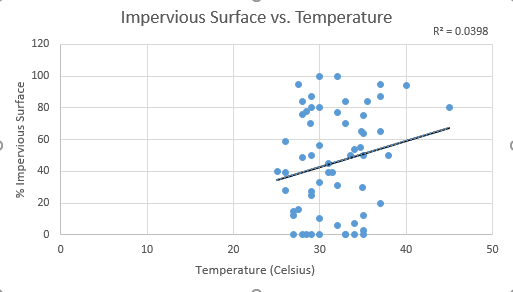
1. Briefly describe what you understand to be the goal of the data collection. What
hypotheses are you testing?

The goal of the experiment is the collection, data analysis, and understanding of ant populations in urban environments’ preference in food baits. The experiment tested the hypothesis of the effect of urban environments on ant food preferences.

2. Give a brief explanation of how the study was carried out and what was measured. You should include a simple description of the study design, what variables were measured, and what were the units of measure. How were these variables measured? How many times was the experiment repeated in your group? In the class overall? Discuss anything that went wrong during the study.

The Ecology lab classes at the University of Tennessee at Chattanooga have been compiling data from 2016-2018 and asking how urban environments effect ant food preferences. Temperature and the percent of impervious surface (pavement) were measured to understand how urbanization can impact the food preferences for ants. In this experiment, each class group picked four locations in an urban environment. Of these, two sites had to be predominately impervious surface and two sites were predominately green areas. The percent impervious surface was measured at the sites by pacing 25 paces in four equidistant angles. The amount of steps on concrete during the four angles walked was recorded to give us the percentage impervious surface. At each site, six baits were laid on accessible index cards on the ground for the ants: oil, water, amino acids, cookie, salt, and sugar. The temperature was recorded via a thermometer in Celsius and the coordinates were noted via GPS. The baits were left to sit undisturbed for one hour and then groups returned to collect the results. Ants were carefully gathered from every index card holding the bait and placed into a sealed plastic bag that marked the location and bait used. Every group individually counted the ants from their bait sites and compiled it into the class data set. Each group had one data set added to the data set. In 2018, the class of five groups recorded their findings.

Statistical Data Tested: 

Independent Variable: Bait Type

Dependent (Response) Variable: Number of Ants Collected at Each Bait

  • Mean: 77.55
  • Standard Deviation of Response Variable: 150.91
  • Standard Error of Response Variable: 19.48

Categorical Variable: Bait Type

Continuous Variable: Time, Temperature, Impervious Surface Percentage


One-Way ANOVA Analysis:

anovaANT

Q: What is the null hypothesis for the analysis?

The null hypothesis for the data is that the bait type does not correlate with the amount of ants found at each bait site. Because the P-Value<0.05, the null hypothesis is rejected.

Q: What p-value do you need to reject the null hypothesis?

The p-value needed to reject the null hypothesis is 0.05. The P-Value found and displayed in the ANOVA test is 0.000069. This value is less than 0.5, meaning that the null hypothesis is rejected. Some argue that p-values are not an accurate measure of evidence against the null hypothesis. From the peer-reviewed article I read, “Testing a Point Null Hypothesis: The Irreconcilability of P Values and Evidence“, James O. Berger concluded that “P values can be highly misleading measures of the evidence provided by the data against the null hypothesis.”

Q: Run the One-Way ANOVA on your bait preference data. Is there a significant difference? What is the p-value?

The p-value of the ANOVA test is 0.000069. This value is significantly different from the 0.05 p-value used to reject the null hypothesis. The p-value is much smaller than 0.05, meaning it is significantly different, but most importantly, is used to reject the null hypothesis. When the null hypothesis is rejected, the alternative hypothesis is valid.

Q: Based on your findings, how would you summarize your results?

Upon statistical analysis and further comprehension of the ANOVA test, it is clear that there is a clear correlation between bait type and amount of ants collected at each site. The p-value is less than 0.05 which signals that the null hypothesis, “Bait type does not correlate with the amount of ants found at each bait site.” is rejected. In contrast, the alternative hypothesis is now accepted. This can be summarized by stating that some bait types are more successful at attracting ants than other bait types.

Scatterplot: 

Ant.predictiongraph
Prediction of Trendline
Scatterplotants
Actual Results Found

Q: What is the R² value?

The R² value of the scatterplot is 0.0398. This value is very small, meaning that the correlation between impervious surface and temperature is weak.

Q: Does your Excel scatterplot match your prediction graph?

My prediction based on the trendline was correct. The correlation is not as strong as I had thought it would be, but the trendline still supports my prediction.

Q: Summarize your results using the graph and the R² value

The scatterplot shows the relationship between the temperature on the x-axis and percent impervious surface on the y-axis. As the temperature increases, the percentage of impervious surface generally increases. The correlation of the trendline is weak (0.0398), but the data supports my hypothesis that I made in the first scatterplot. From the data, we can conclude that for this urban environment, ants are more inclined to be found on pavement surfaces as the temperature increases.


Additional Data Analysis:

1. Compare your results to the 2016 ecology lab results. This time last year, Chattanooga was experiencing a severe drought. Is there evidence in the data analysis to reflect the environmental conditions? Was there a significant difference in ant diet preference?

The evidence supported by the data from the severe drought of 2016 and the normal 2018 results found that the number of ants has increased by 54% since 2016. In the 2016 lab results, an average of the 24 samples gathered found the average number of ants collected was 40.54 ants at each site. In the most recent results found in 2018, the average number of ants collected at each site was 74.45 ants over 20 samples. I believe that it is obvious there is a difference in these totals most likely due to the severe conditions of 2016. This would also be an interesting hypothesis to conduct as well. Perhaps this large difference in averages could be due to an unexpected variable that wasn’t accounted for. For instance, maybe in the first experiment a group of children tampered with the bait sites and created this extreme difference. The change in ant food preference between the years was also very significant. In 2016, the most preferred bait was sugar followed closely by cookie. In 2018, this was very different. In the 2018 data, the preferred bait was by far cookie and then oil. These changes are another study that would be interesting to test.


Summary:

1. How did ant diet preference change from year to year?

In 2016 during the drought, ants favored the sugar bait followed closely by cookie. Just two years later, ants bait preference was largely the cookie bait with the oil bait in second place.

2. What factors might have contributed to the differences of data preference?

Factors that might have contributed to the differences of data preference could be the extreme drought, temperature difference, differences in time, humidity, and unequal amounts of time the baits were left out. Like I mentioned before, other variables naturally present may have altered the results. These variables were unaccounted for and not predicted. An example of a variable that could have altered the data is the disruption of testing sites by the public.

3. What adaptive advantages might there be to changing one’s diet in a new environment?

Adaptive advantages to changing one’s diet to a new environment are greater reproductive success. These organisms have become well-adapted to urbanization and are willing to shift diet preferences in order to survive where it could not before.

4. What are some follow-up questions you may explore based on your results?

I wonder what variables we did not account for. I am curious as to how some numbers are very large from the results. Perhaps the experiment was not replicated the same at these sites. I also am curious as to how ant populations numbers and diet preference may change in one year, five years, and ten years.

5. As a science communicator, explain how analyzing and visualizing your data has helped you understand ecological processes. 

When the data is visualized, it makes it much easier to draw conclusions about bait preference and make inferences. These inferences help the reader to understand the information and act as a visual tool. This data is much easier represented and shared in this statistical format.

1_eceiA-qrE7qMsDFwqAuRIQ
Source: Michelclaessens.net

6. What are some challenges/limitations you’ve faced as a student in analyzing and interpreting your data?

The data was easily interpreted once it was converted to visual bar graphs, scatterplots, and ANOVA graphs. I was not limited by any factors but my greatest challenge was operating the ANOVA single test. Once I followed the directions I was presented and researched additional help, the ANOVA test was easier to conduct.

7. What advice would you offer a freshman science major in terms of how to overcome or avoid the challenges/limitations that you have discussed?

The advice that I would offer to a freshman science major in terms of how to overcome the challenges and limitations they may encounter is to stay perserverent. For me, Excel did not always come easy, but help is available from your classmates, instructor, and internet resources.

References:

Berger, James O; Sellke, T. (1987) Testing a Point Null Hypothesis: The Irreconcilability of P Values and Evidence, Journal of the American Statistical Association, 82:397, 112-122, DOI: 10.1080/01621459.1987.10478397
Peters, Hans P. “The Gradient Model.” MichelClassens.net, Research Center Jülich, http://www.michelclaessens.net/news_en.html

New Frontier of Ecology: How Urbanization Impacts Native Species

ants-love-junk-food
Human foods consist of a large portion of the diet of ants in urban landscapes.  (Image: Apex Beats)

NYT Article: “Bugs in Manhattan Compete with Rats for Food Refuse”

Q: What factors might explain the similarities and differences between your observations and the ones from the NY study?

In my experiment, we were interested in the food preference of ants at four different locations. The locations were picked at our group’s discretion, with some limitations. The locations tested were to be partially obscured by sunlight. In addition, we were interested in testing the prevalence of insects in an urban ecology. Two of our locations were located in predominantly green areas and the latter were located by predominately impervious surfaces. We set six different types of bait out at each location: cookie, water, oil, amino acids, salt, and sugar.

The experiments were similar in the fact that they both studied urban ecology and abundance of insects, although our experiment was interested strictly in ants. In both experiments, the food was left out for the insects to indulge. The New York Times study placed their food in a cage to restrict access to animals while our group’s experiment left the bait out on an index card. The retrieval methods of ants were also different. The Manhattan study collected ants by using an aspirator with vacuum suction. Our collection method was inserting the whole index card carefully into a sealed bag as to not lose any ants. The New York study differed from our experiment because their study was also interested to see how flooding from Hurricane Sandy has affected the fauna. Another obvious difference between the two experiments is location. Species distribution of ants is not the same in downtown New York as it will be on the campus on the University of Tennessee at Chattanooga. The experiment in New York found 32 different species of ants whilst my group only collected a few different species of ants in our samples, but class data may vary. I believe a major influence in the wide amount of ant species found was due to their longer sampling time. The researchers at the green spaces of New York left their food bait out for roughly 24 hours while our group waited an hour. A hypothesis for this may be that the longer the food is left available to the ants, the more representatives of different ant species will be collected.

Q: Recent studies have suggested that urban areas are good for biodiversity. Under what circumstances might cities help increase biodiversity. HINT: Think about the size and connectedness of green spaces in an area.

Biodiversity in urban environments can be improved with the addition and maintaining of green spaces. The greater the total size of a green space, the greater the diversity of organisms will be found there. In addition to this, the biodiversity of the city can also be improved by connecting these green spaces. A city may need to increase biodiversity in its urban area if food product begins to accumulate. Insects, birds, and other scavengers can find a niche cleaning up the waste. Chattanooga is one city that has taken recent measures to ensure biodiversity in an urban environment. Just this past Friday, the city of Chattanooga unveiled the recently renovated Miller Park. Closed for renovations this past year, the park features over 20,000 square feet of green space at the heart of the city’s core. This park will provide new habitats for organisms in the area

Q: In addition to ants, what type of organism do you think would be well adapted to cities? Vulnerable?

In addition to ants, I believe that organisms that would be well adapted to cities are coyotes, raccoons, pigeons, rats, and crows. As we discussed in lecture, coyotes have a very diverse diet. A comparison of fecal matter from coyotes from natural wooded environments compared to coyotes found in urban environments found that the coyotes found in urban environments had a more varied diet. Despite being great scavengers with a more varied diet, the urban coyotes are more prone to disease due to the protein-deficiencies in their diet compared to the coyotes found in wooded landscapes. I strongly believe that raccoons, pigeons, rats, and crows would be well adapted to cities due to their reputation as scavengers. As a city naturally expands into the suburbs and forested area near it, biodiversity is lost when species cannot adapt to the new urban environment. I believe organisms that are most vulnerable to urbanization are most plant species and larger animal species such as deer. I believe that as the concrete jungle covers the terrestrial remains of the forest, the vast majority of plants will be wiped out. I hypothesize that deer will not adapt well to the city environment because they are larger animals and they are subject to loss of habitat and may have their numbers depleted due to cars.

Q: How might humans improve the function of cities as an ecosystem?


I think humans can start to improve the function of cities as an ecosystem by having a greater respect of nature. We, as humans, need to understand that we have invaded the habitats of these native animals. Urban development such as housing and the creation of businesses may sound appealing in theory, but we must make these decisions responsibly and with consideration of the native organisms it may affect. With urbanization, organisms whose habitats have been encroached upon are put to the test and must sink or swim. The addition of green spaces in the city will increase the biodiversity of the area, but nowhere near the pre-urbanized levels.


Frontiers in Ecology and Evolution: Urban Ecology

Abstract One: Temporal and Space-Use Changes by Rats in Response to Predation by Feral Cats in an Urban Ecosystem


Q: Briefly summarize the study question and findings. What did you find interesting about the study?

It is common practice for feral cats to be released into cities as a control agent for limiting rat populations in the city. Although it may seem like a harmless practice, releasing these predators into the cities causes widespread loss of native wildlife in urban environments. The researchers micro-chipped rats and set up field cameras to analyze the impact on introducing new predators on existing rat populations.


Q: As a science communicator, what key takeaways should the general public be aware of based off your findings?

I believe the general public should takeaway from this study more than just the example of the rat and the cat. They should instead understand that voluntarily introducing predators into new environments with a highly specialized food web can cause a loss of biodiversity and native wildlife in an already vulnerable ecosystem. 

Q: What questions would you ask the authors about their study?


My question for the author would be to clarify with more detail how the experiment was set up. Specifically, I am curious as to the methods taken to find, collect, and then tag hundreds of rats.


Abstract Two: Urban Bird Feeders Dominated by a Few Species and Individuals


Q: Briefly summarize the study question and findings. What did you find interesting about the study?

In this study, the researchers in Auckland, New Zealand analyzed the population of birds that came to feed at 11 feeders located in different urban residential areas of the city. The feeders were loaded with 4-5 slices of bread and a cup of birdseed each. They found that birds are solitary organisms and fed at these feeders alone 57.3% of the time. The results showed that 11 different species of birds visited the feeders throughout the 18 month study. Of these 11, house sparrows and spotted doves were by far the most common. Interestingly, the only native species to the area, Silvereyes, were being outcompeted and were only present in 4.6% of all bird visitations.

Q: As a science communicator, what key takeaways should the general public be aware of based off your findings?

This study was an interesting example of how some organisms are better adapted to the city environment than others. Silvereyes, the only native species, were outcompeted in their own habitat by the 10 other invasive bird species. The public should make note from this study that urbanization can have drastic effects on the existing populations of organisms that lived there before and that some species can adapt to urban environments better than others.


Q: What questions would you ask the authors about their study?


I would ask the researchers if they plan to replicate the experiment. The study was done in 2012-2013 and I believe it would be interesting to replicate the experiment using the same methods and determine if microevolution is happening to these bird species within the city.


References:

Galbraith JA; Jones, DN; Beggs JR; Parry K and Stanley MC (2017) “Urban Bird Feeders Dominated by a Few Species and Individuals”. Front. Ecol. Evol. 5:81. doi: 10.3389/fevo.2017.00081

Parsons, MH; Banks, PB; Deutsch, MA and Munshi-South, J (2018) “Temporal and Space-Use Changes by Rats in Response to Predation by Feral Cats in an Urban Ecosystem”. Front. Ecol. Evol. Not yet published. doi: 10.3389/fevo.2018.00146

Puiu, Tibi. “Ants Collecting a Potato Chip”. Apex Beats, ZME Science, 6 Apr. 2015, https://www.zmescience.com/science/biology/ants-love-junk-food-0523534/.